Notes from a cradle: What I learned travelling along the Nile
Every individual human journey begins suspended in fluid—sheltered within the dark, quiet waters of a mother’s womb. It is an intimate truth of biology: we are born of water before we ever draw our first breath. Yet, standing on the lush banks near Jinja last October, watching Lake Nalubaale (Lake Victoria) surge forward to give birth to the White Nile, I felt that truth scale up to encompass our entire species. Humanity did not merely adapt to land; we clung to the fluid blue veins of the Earth. Rivers gave birth to our civilisation.
The Wild Power at the Source
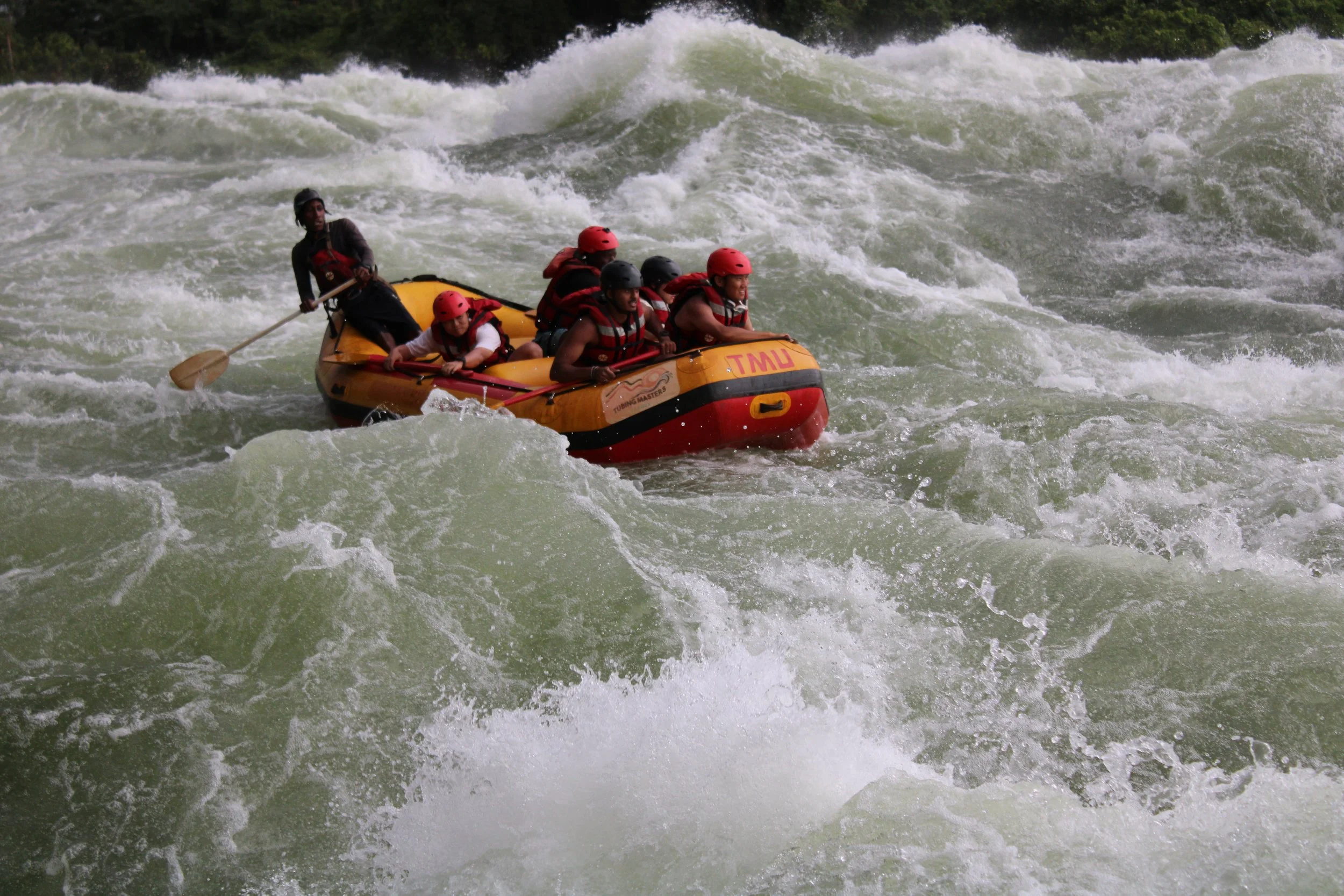
Itanda Falls, Nile, Uganda
Standing there at the lake’s edge, the excitement gave way to a deeper stillness—a sensory rush of churning turquoise water, wet river stones, and the deafening, rhythmic roar of currents breaking free from the lake basin. To plunge into those wild, white-water rapids on a raft was to feel the raw, muscular power of a living force unleashing itself upon the continent. The vessel was tossed like a leaf upon the foaming swells, every wave a crushing, icy reminder of the river's unyielding momentum. The air carried the scent of damp earth and crushed leaves, punctuated by the sharp cries of fish eagles circling high overhead. To watch millions of gallons gather momentum and pour northward felt less like observing geography and more like standing at the literal pulse of human origin. Long before pharaohs carved their ambitions into stone, this current served as a sanctuary and a green highway, guiding our earliest ancestors out of East Africa.
Sacred Stillness and the Shadows of War
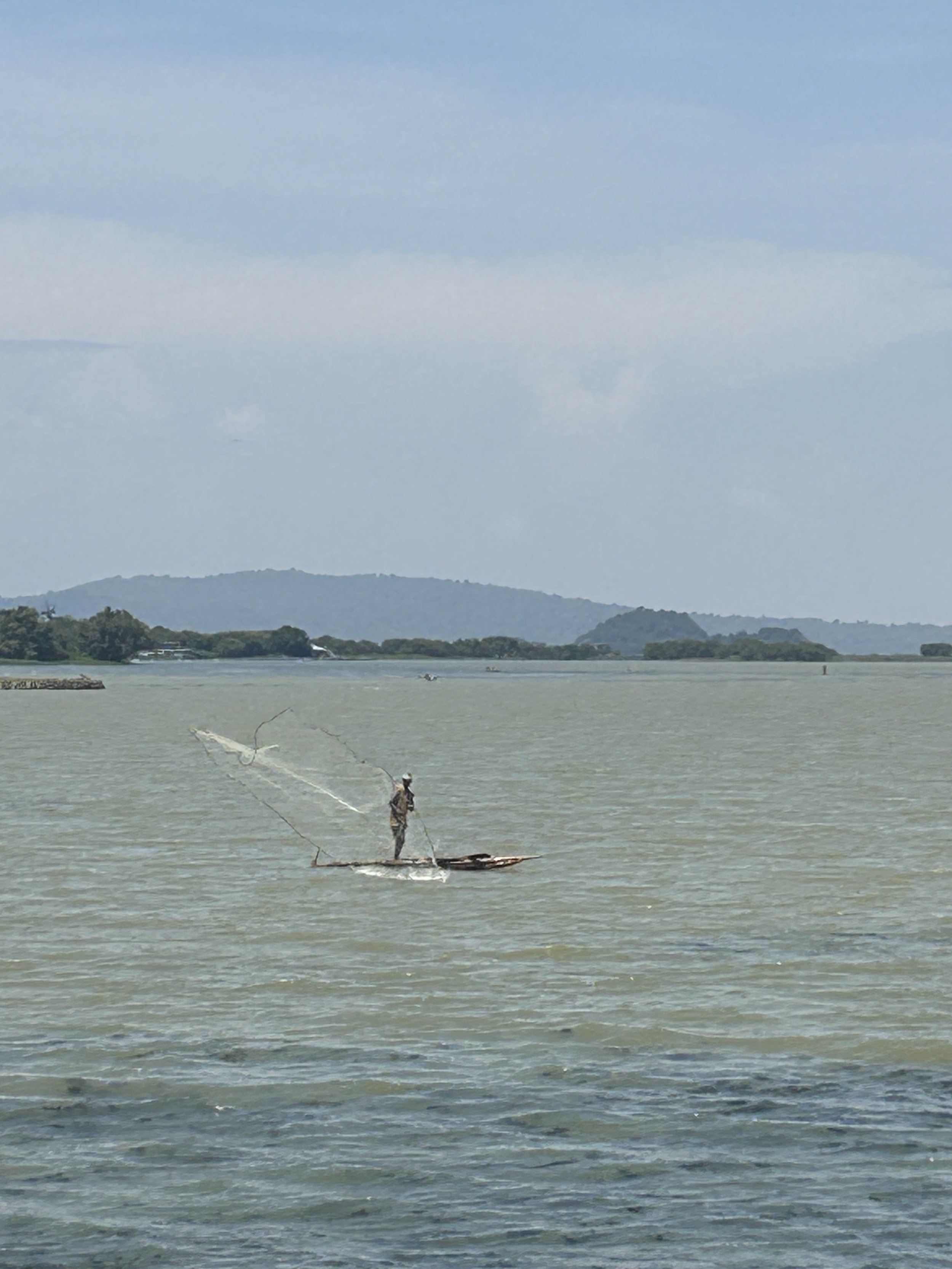
Fisherman on Lake Tana, Bahir Dar, Ethiopia, using traditional papyrus canoe for fishing.
Later that month, travelling into the cool, misty highlands of northern Ethiopia, I encountered the second heart of this ancient memory at Lake Tana—the cradle of the Blue Nile. My heart was racing as I landed in Bahir Dar, a major city in the northern Amhara region of Ethiopia. I struggled to reconcile the realities of the ongoing conflict in the area with the peace I felt as I crossed Lake Tana to visit the 14th-century monastery on the island in the lake. Watching local fishermen glide silently across the mirror-like surface in traditional papyrus canoes (tankwas), I felt a reverence settle deep inside my bones. The only sound was the rhythmic dip-and-drip of wooden paddles slicing through the stillness, blending with the soft rustle of papyrus reeds along the shoreline. It felt as though time itself had paused to listen. Yet this serene mountain lake feeds the powerful Blue Nile—the volatile, silt-laden torrent that carries the river's lifeblood through Sudan and Egypt, sustaining countless generations thousands of miles away.
That reverence, however, was shadow-stained by a tragic reality. The lands surrounding Lake Tana and the Blue Nile basin have been scarred by armed conflict and geopolitical strife. Further downriver, that shadow deepens into absolute heartbreak: Sudan, where the White and Blue Niles finally meet at Khartoum, remains trapped in an ongoing, devastating war. The very land where these two great currents embrace to become one Nile is torn apart by human conflict, leaving millions displaced and suffering along the banks of a river that was meant to bring life, peace, and abundance.
Transmitters of Life and Human Thought
Viewing these headwaters purely through the lens of agriculture or maps misses their true essence. Rivers were humanity’s first teachers and transmitters. Long before we sought to measure them, their currents carried not just silt and water, but early geometry, architectural reverence, spiritual cosmology, and the roots of human language.
Across the globe, the same sacred dynamic echoed along every major river system:
· The Tigris and Euphrates: Twin currents in the Fertile Crescent that cradled early Mesopotamia, weaving trade, myth, and human consciousness together.
· The Indus and Ganges: Sacred waters across South Asia that nurtured early cities while anchoring the human spirit directly to the living world.
· The Yangtze and Yellow Rivers: Great Asian channels where ancient communities aligned their lives with the rhythms of seasonal floods, giving rise to interconnected dynasties.
These liquid highways connected us to one another, bound us to the landscape, and reminded us that we share this existence with every living creature that kneels at the water’s edge to drink.
The Delta Paradox: Grace Amidst the Waste
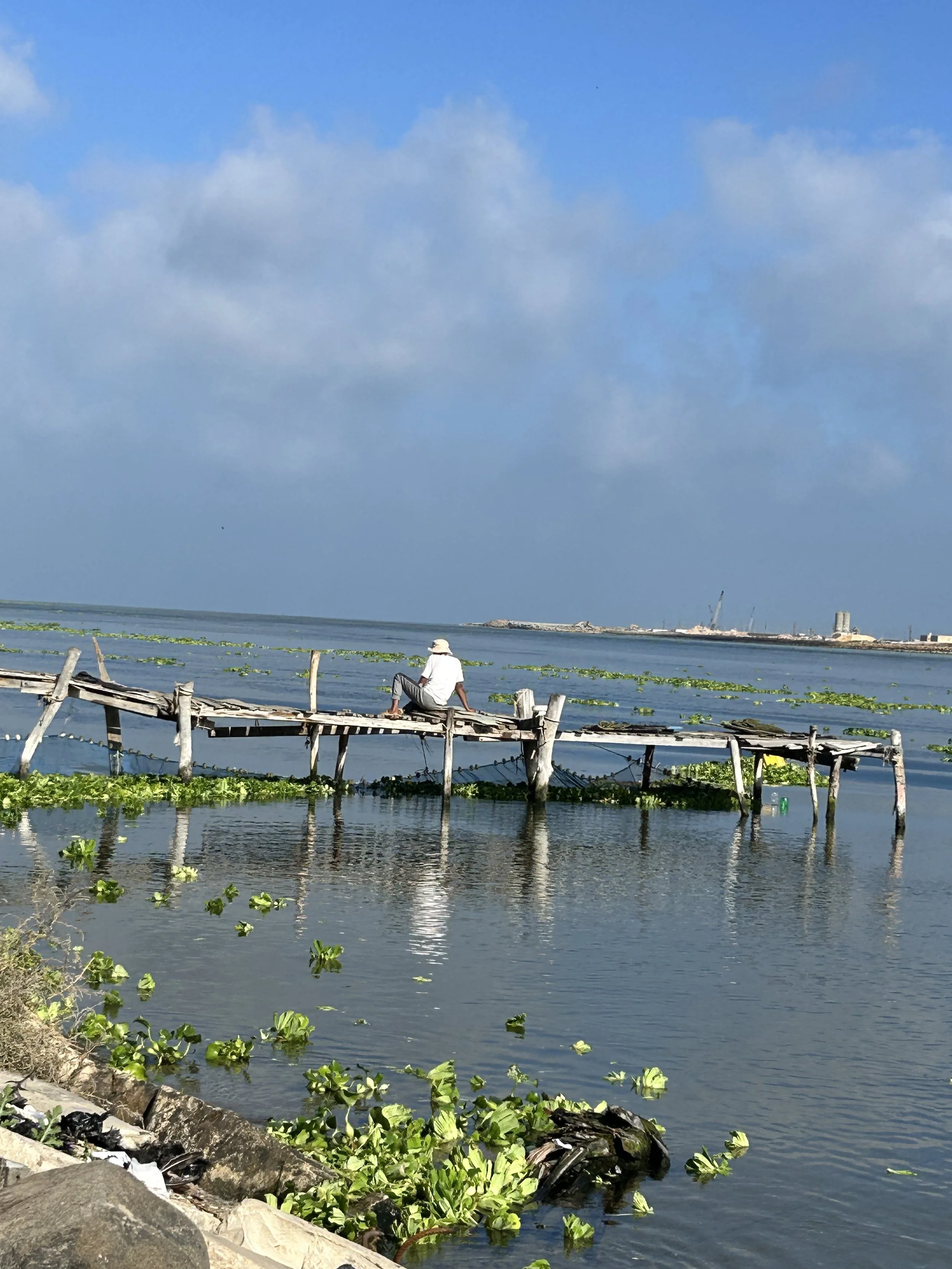
Fisherman in the Nile Delta, Rashid (Rosetta), Egypt
Several weeks later, my pilgrimage brought me to the end of the journey: the Nile Delta at Rashid (Rosetta) in Egypt. Here, where the legendary river finally meets the Mediterranean Sea, the contrast is stark and haunting. There is a timeless, quiet grace to the local fishermen casting their nets into the brackish currents, moving at the slow, ancient pace of their ancestors. Yet right beside them, towering mounds of plastic rubbish, household waste, and debris litter the muddy banks and spill over into the nearby streets. The sacred artery that nurtured humanity's dawn is choked by the very species it birthed.
A Return to the Source
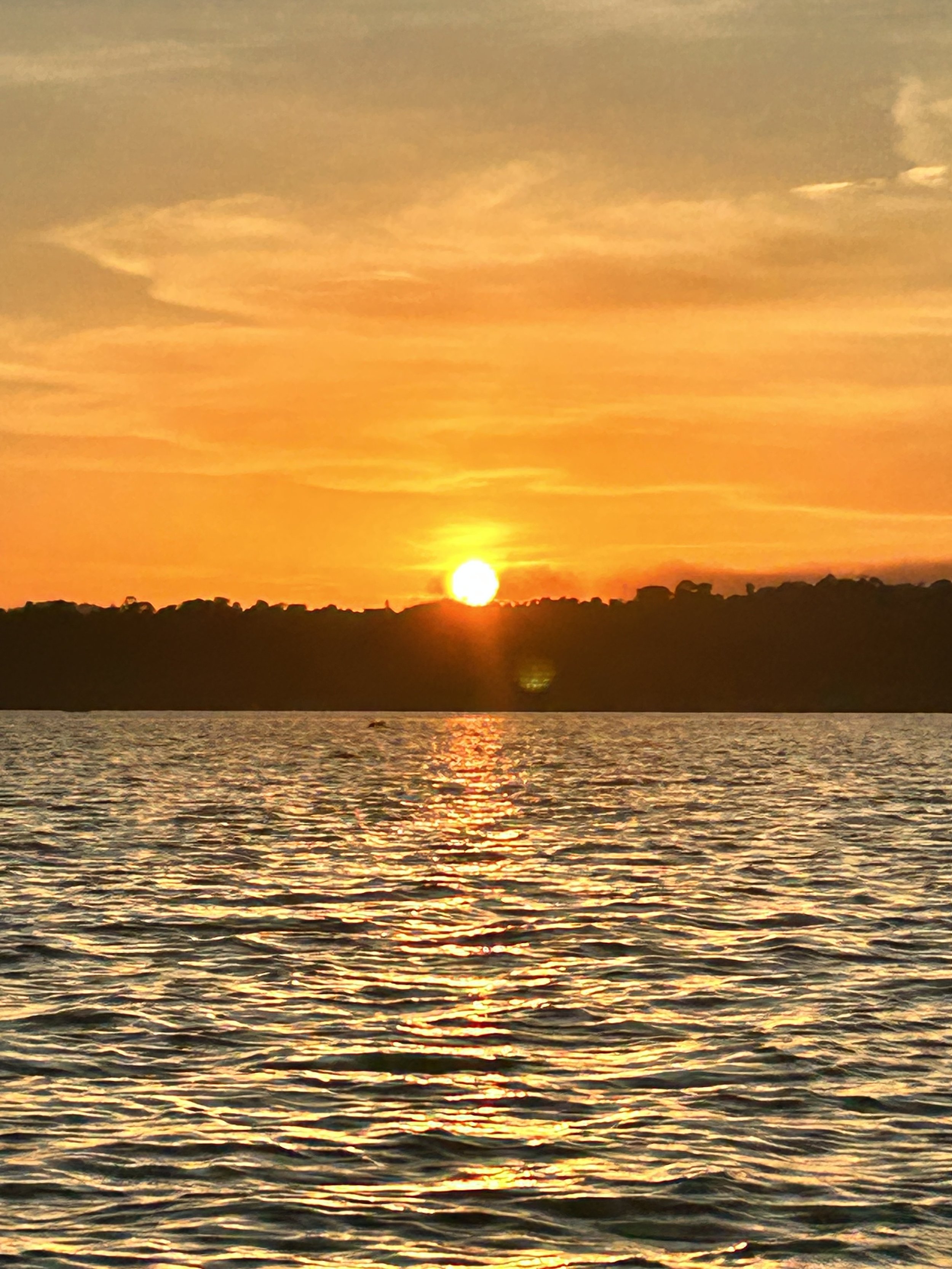
The source of the Nile, Lake Naluballe, Uganda
In our modern age, we have forgotten how to listen. We draw arbitrary lines across maps, wage wars over control of land and water, drop our waste into living streams, and reduce these lifelines to assets to be extracted, dominated, and manipulated. We attempt to control the very waters that nurtured us into being.
Yet, the river remains a living organism—a sacred container of life that has held our collective story since the birth of humanity. Water carries an ancient intelligence—it flows according to gravity, landscape, and sky, utterly indifferent to human borders or our fleeting desires for power. The river does not exist to be mastered; it exists to remind us of where we come from.
Standing where the White and Blue Niles begin, listening to the thunder at Jinja, mourning the conflicts in Ethiopia and Sudan, and watching the choked, weary mouth at Rashid, the truth becomes quiet and clear. The ultimate journey for humanity is not to bend nature to our will, but to return to our source. To heal the divisions we have created, we must unlearn our impulse to dominate, lean down toward the bank, and learn once more how to listen to the water.